Tango Classes in Bournemouth
Tango Bournemouth
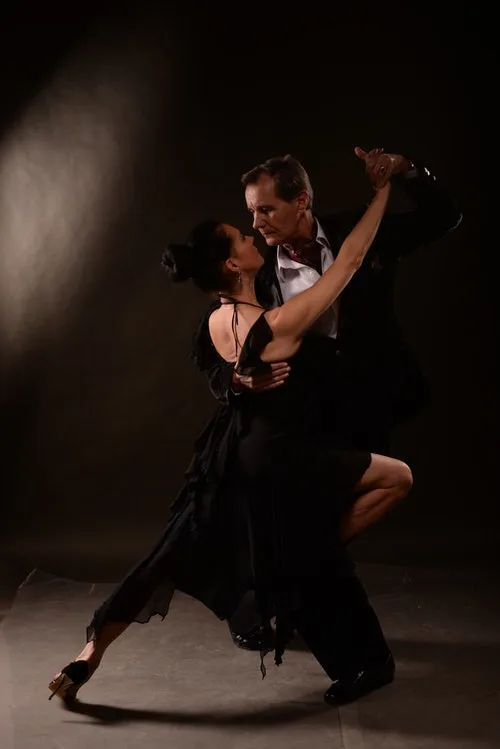 Tango — Bournemouth
Class is coming soon
Fill out the form for more info
Class Details
Location: TBC
Day: TBC
Time: TBC
Age Group: 17 – 75
Teacher: —
Class Structure
Beginners Class — 60 Minutes
Posture and the Embrace
We start with how you hold yourself and how you meet a partner — the abrazo. Tango carries no leverage or shoving; the whole thing runs on a soft, shared frame, and getting comfortable in it is the first real lesson.
Walking Together
The walk is the heart of tango and most of what you will ever do. You learn to move as a pair down the line of dance, one offering and one following, until stepping in time with a stranger stops feeling strange.
Pivots and Ochos
In come the dissociation and pivots that produce the ocho, tango's figure-eight. This is where the dance opens out and starts to feel like tango rather than careful walking.
The Music and the Pause
We listen properly — where to move, and crucially where to hold still. Learning to pause is what separates tango from every dance that only rushes forward, and it is oddly the hardest part to trust.
Wind Down
A stretch and a short recap of the walk and the ocho, so you leave with the two things a practica actually asks of a beginner.
About Tango Classes in Bournemouth
Argentine tango surprises almost everyone who tries it, because there is no routine to memorise. It is improvised on the spot — a quiet conversation between two people held in an embrace, where one person offers a direction and the other answers, step by step, to whatever the music is doing. That is why we spend the early weeks on how to stand, walk and listen rather than on a sequence of named figures.
Bournemouth has a small but real tango community, the kind that gathers for practicas — relaxed practice sessions — and the occasional milonga, its proper social evening. It is an understated scene rather than a loud one, which suits a dance built on stillness and connection, and it welcomes newcomers arriving on their own. Tango classes in Bournemouth are the grounding for that world: come solo, rotate through the room, and build the walk and the embrace that every social floor is founded on. Your teacher will always know which practica is running that week.
Classes are held in central rooms near the Square and BH2, a short bus or taxi from the railway station, which sits about a mile back from the seafront rather than beside it. A smooth-soled shoe that stays snug on the foot is ideal so you can pivot cleanly; leave the grippy trainers out of it.
Browse all 20 of our dance classes in Bournemouth, or see tango classes in our other 66 cities.
Fill Out the Form for More Info
Fill in your details for up-to-date class info.
Why Choose Tango in Bournemouth?
No Partner Required
The room rotates all evening, so coming alone still gives you a full hour of dancing across a changing set of partners. A couple who prefer to stay together only need to say so at the start.
Improvised, Not Choreographed
There is no sequence to forget under pressure. You learn to lead and read in the moment, which is far more forgiving for a beginner than memorising a routine that falls apart the instant nerves hit.
Connection Is the Skill
Tango teaches you to listen through a shared frame rather than muscle a partner around. It is a genuinely different kind of attention, and people find it unexpectedly absorbing.
A Floor to Grow Into
Bournemouth's practica and milonga scene gives you somewhere real to take the walk once it settles, and your teacher can point you to the friendliest night on.
Your Tango Journey
From first class to confident dancer — here is how it usually goes.
The Walk and the Embrace
Standing and Holding
Finding a relaxed posture and a comfortable abrazo, then walking with a partner down the line — the plainest-looking part of tango and quietly the most important.
Shoes That Help
A snug, smooth-soled shoe so the foot pivots rather than catches; proper tango shoes can wait until you are sure you are staying.
Turning and Pivoting
Ochos
The dissociation and pivots that build the figure-eight, where you begin to feel the dance curve and flow instead of only travelling in a line.
A Clear Lead
Offering a direction a partner can actually read, and following one without anticipating — the give and take that makes tango work.
Music and Improvising
Hearing the Pause
Learning where the music asks you to wait, and trusting stillness as part of the dance rather than a mistake.
First Practica
Gathering the nerve to walk into a Bournemouth practica and dance with people you have not met — the point of all the groundwork.
Making It Yours
Musicality
Choosing when to move and when to hold so the dance answers the orchestra rather than a set of steps in your head.
Into the Milonga
Stepping up from practica to a full milonga, and deciding which strands of tango you want to chase next.
Tango in Bournemouth FAQ
Everything you need to know before your first class.
Do I need a partner for tango in Bournemouth? +
No. The class rotates all evening, so arriving on your own still gives you a full hour of dancing with a range of partners. A couple who would rather stay together just mention it before we begin.
Is this Argentine tango or the ballroom kind? +
Argentine tango — the improvised, close-embrace social dance, not the sharp, choreographed ballroom version. It is softer, quieter and built on connection and the walk rather than dramatic head-snaps.
Where are the classes held? +
Central rooms near the Square and BH2, a short bus or taxi from the railway station, which sits about a mile inland rather than on the seafront. The exact address and its parking come by email once your first class is booked.
How much is a tango class in Bournemouth? +
£8 on the night, paid as you arrive, with no joining fee and no commitment. Once a studio fixes its regular weekly slot, discounted blocks open up for anyone who wants to book ahead.
It looks so slow and difficult — can a beginner really learn it? +
Yes. Because it is improvised, there is no long routine to fail; you build from the walk outward, one idea at a time. The slowness is a gift for beginners — it gives you time to feel what is happening rather than race to keep up.
What should I wear, and what shoes work? +
Something you can move comfortably in, and a snug, smooth-soled shoe so the foot can pivot cleanly. Trainers grip the floor too firmly for the turns, and heels are not required to start.
Is there a tango scene near Bournemouth I can join? +
There is — a small, welcoming community that meets for practicas and the occasional milonga around the town and wider Dorset coast. It is a gentle, low-key scene, and your teacher will always know which night is running that week.
How soon could I go to a practica? +
A couple of months of steady classes usually does it — a reliable walk, a clear embrace and the beginnings of the ocho are plenty to hold your own. A practica exists precisely to practise, so nobody expects polish.
Can I come with a friend or a group? +
Of course, and it helps the nerves. You will still rotate through the whole room, which is what improves you fastest, but arriving together makes that first practica far less daunting.