Contemporary Dance Classes in Reading
Contemporary Reading
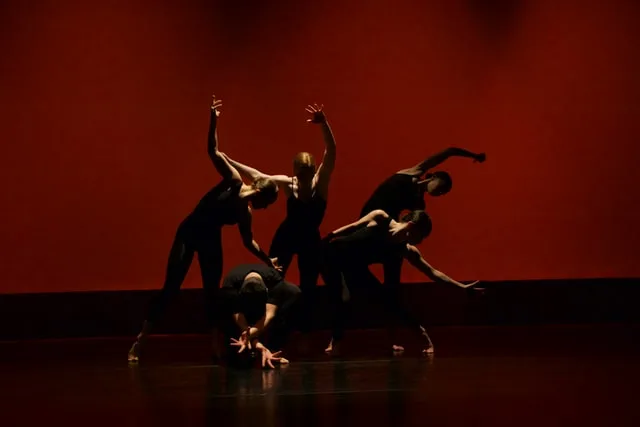 Contemporary — Reading
Class is coming soon
Fill out the form for more info
Class Details
Location: TBC
Day: TBC
Time: TBC
Age Group: 17 – 75
Teacher: —
Class Structure
Beginners Class — 60 Minutes
Breath and Mobilise
We begin lying down, following the breath and easing the spine awake — mobilising joint by joint rather than forcing anything. It sets the unhurried, inward tone the rest of the hour keeps.
Fall and Recover
The core skill: sending your own weight toward the floor and letting it carry you back up. We drill the give-and-take that makes contemporary look effortless and keeps it kind on the joints.
Travel the Space
Movement leaves the spot and crosses the room — reaches, spirals, changes of level and direction — so the vocabulary starts to flow instead of sitting still in one place.
Shape a Sequence
The material gathers into a short phrase set to music, sometimes with room to make a moment your own. This is where technique turns into something that actually says something.
Cool, Then Breathe Out
A slow wind-down and a stretch that leaves the body long and the head quiet. Most people notice they walk out calmer than they walked in.
About Contemporary Classes in Reading
Contemporary is the movement most modern dance-theatre is built from — grounded, flowing and driven by feeling. It grew out of ballet and then let go of ballet's fixed positions, so real technique sits underneath without any single correct shape to strike. What it asks for first is honesty in how you move, not a high extension or a bendy spine.
Reading is a fair place to take it up. Reading Rep Theatre produces its own work in the town centre, South Street Arts Centre programmes touring dance and physical theatre, and the Adult Dance School out in Caversham shows there is a real grown-up appetite for expressive class. You are learning a living style in a town that puts it on stages.
Sessions run at partner studios around the centre, a short walk from Reading station, with the exact room confirmed when you book. Expect to work in bare feet — skin grips better than any shoe — and expect an unusually mixed room, because complete beginners and lapsed dancers who miss it turn up in roughly equal number.
Browse all 20 of our dance classes in Reading, or see contemporary classes in our other 66 cities.
Fill Out the Form for More Info
Fill in your details for up-to-date class info.
Why Choose Contemporary in Reading?
Movement That Says Something
Contemporary is the most narrative dance there is — it gives shape to a mood or an idea rather than chasing a pose. You are working toward meaning and feeling, which is why the same phrase never looks the same on two people.
Kinder on the Body Than It Looks
Because it flows and rarely jumps or pounds, contemporary is gentle on the joints while quietly building deep-core control, mobility and balance the gym tends to skip. Plenty of dancers come to it while recovering from harder-impact styles.
Room to Make It Up
Guided improvisation is baked in — short stretches where you generate your own movement rather than copy a set phrase. It is the doorway skill of the style, and a rare hour in the week that belongs entirely to you.
A Real Scene to Step Into
You are rehearsing minutes from Reading Rep and South Street Arts Centre, both of which put dance and physical theatre on through the year. When you fancy watching the professionals, there is proper work on your doorstep.
Your Contemporary Journey
From first class to confident dancer — here is how it usually goes.
Breath and Balance
Getting Started
You get comfortable on the floor, learn to give your weight to the ground and back, and stop bracing against gravity. The first month is about trust more than steps.
What to Wear
Leggings or joggers and a fitted top you can roll and stretch in. Bare feet are the norm — no shoes to buy — and a light layer for the slow cool-down helps.
Finding the Flow
Momentum
Movement starts joining up, one shape spilling into the next, so phrases feel continuous rather than a series of held positions. This is when it begins to look like dancing.
First Improvisation
Short, low-pressure tasks ask you to make your own movement to a prompt — nobody performs a solo, but you get used to trusting your own choices.
Your Own Phrases
Expressive Range
Longer sequences, cleaner floorwork and a widening vocabulary of dynamics — soft, sharp, suspended, dropped — so you can colour a phrase rather than just complete it.
Making Choices
You start shaping material yourself, deciding how a moment should feel and moving it that way. The dancing becomes recognisably yours.
A Mover With Something to Say
Composing
Building your own short work, linking phrases with intent and holding an idea across a whole piece — the creative end of the form opening up.
What Comes Next
Workshops and performances at Reading Rep and South Street, or simply the deep satisfaction of an expressive practice that is entirely your own.
Contemporary in Reading FAQ
Everything you need to know before your first class.
Is contemporary suitable for a complete beginner? +
Very much so — a large share of our Reading class has never danced before. Everything is taught from the ground up, breath and balance first, and there is no set shape you have to hit correctly. You progress at the pace your own body sets.
Does contemporary need me to be flexible? +
No. Flexibility is a nice bonus that develops slowly on its own, but it is nowhere near the point. Contemporary rewards honesty, control and the willingness to give your weight to the floor far more than it rewards a high leg.
What should I wear, and do I need special shoes? +
Leggings or joggers and a top you can move freely in — nothing tight or restrictive. No shoes required; contemporary is danced in bare feet because skin grips the floor better than any sole. Bring a layer for the slow cool-down.
Where in Reading are the contemporary classes held? +
At partner studios around the town centre, an easy walk from Reading station and on the main bus routes. We confirm the exact venue when you book, choosing rooms with proper sprung or forgiving floors for the floorwork.
How much does a contemporary class in Reading cost? +
£8 for a drop-in — no membership and no term commitment, just pay for the session you attend. Once the regular Reading timetable is set, discounted multi-week blocks will be offered for anyone who wants them.
Will I have to improvise in front of people? +
Only in gentle, shared exercises where the whole room is doing it at once — never a spotlight solo you did not ask for. Improvisation is introduced slowly, and most people end up looking forward to it rather than dreading it.
Do I need a dance or ballet background to start? +
Not at all. A ballet background gives you a head start on some vocabulary, but it is not required and plenty in the room have none. Contemporary deliberately left ballet's rulebook behind, so you are not missing a prerequisite by starting here.
Is it a proper workout, or more gentle? +
Both, oddly. It is low-impact and rarely leaves you breathless, yet controlling your own bodyweight through falls and recoveries builds serious deep-core and stabilising strength. You get stronger while it feels more like a wind-down than a workout.
Where can I see contemporary dance in Reading? +
Keep an eye on Reading Rep Theatre and South Street Arts Centre, both of which programme touring dance and physical theatre through the year. Your teacher will flag anything worth catching once you are hooked.