Tango Classes in Newcastle
Tango Newcastle
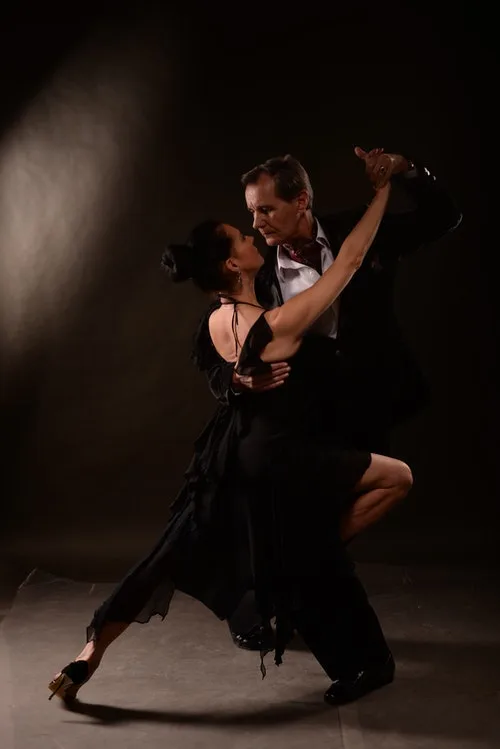 Tango — Newcastle
Class is coming soon
Fill out the form for more info
Class Details
Location: TBC
Day: TBC
Time: TBC
Age Group: 17 – 75
Teacher: —
Class Structure
Beginners Class — 60 Minutes
Standing and Walking
Tango begins, oddly, with how you stand and how you walk. The first ten minutes are posture and a grounded, deliberate walk — the plainest-looking thing in the class and the one everything else is built on. Get the walk right and half of tango is already yours.
The Embrace
Next we build the embrace — the close, shared frame through which the whole dance is communicated. It sounds intimate and it is, in a completely comfortable way; it is really just the channel two dancers use to feel where the other is going before a single step is taken.
Ochos and Turns
Now the recognisable shapes: the ochos, the pivots, the gentle turns that give tango its curling, unhurried look. We break them down slowly, because tango prizes precision over speed, and a step done clearly beats three done in a rush every time.
Making It Up
Here is tango's secret — it is improvised, not choreographed. We play lead-and-follow games where you build a short dance in the moment from the pieces you have learned, discovering that there is no routine to forget, only a conversation to have.
One Quiet Tanda
We close with a calm social dance to a couple of tango songs — no talking through it, just moving. It is a first taste of the milonga, the social gathering tango lives for, and the moment the penny drops about why people fall for this dance.
About Tango Classes in Newcastle
Argentine tango is not the rose-in-the-teeth version from the films — it is quieter, closer and far more interesting than that. At its centre sit the embrace and a shared walk, two people improvising a path across the floor in real time. There is no set routine to memorise, which is precisely why complete beginners take to it once they stop trying to look like anything.
You do not need to bring anyone. The class rotates, so you dance with everyone and learn to lead or follow — or both — by feel rather than by counting. And Newcastle lends it the perfect backdrop: our city-centre studios sit among the honey-stone curves of Grainger Town and Grey Street, a Georgian setting once voted the finest street in the country, and tango suits that sort of grandeur down to the ground.
You will find our partner studios in the centre near Grey's Monument and Central Station, minutes off the train and the Metro, with exact addresses shared when you book. Tango rewards patience far more than athleticism, so there is no floor you are behind on and nothing to hurry — just the walk, the embrace, and the slow, genuine pleasure of two people moving as one.
Browse all 20 of our dance classes in Newcastle, or see tango classes in our other 66 cities.
Fill Out the Form for More Info
Fill in your details for up-to-date class info.
Why Choose Tango in Newcastle?
The Walk Is Everything
Tango is famously built on the walk before anything fancy, which is oddly reassuring for a beginner — you are not chasing flashy tricks, you are refining something deeply human. Master the walk and the embrace and you can already dance; the rest is detail added over years.
Come Solo, Rotate Round
No partner required. The class swaps partners as it goes, and we teach both leading and following, so you arrive alone and leave having danced with the whole room. It builds the sensitivity that makes tango feel like listening rather than steering.
Nothing to Memorise
Because tango is improvised, there is no long routine hanging over you and nothing to forget under pressure. You learn a vocabulary of movement and then converse with it in the moment — which is why it stays fascinating for a lifetime, not a term.
A Grand Georgian Setting
There is a fitness to learning tango among Grainger Town's sweeping Georgian stone, in a city centre built to be elegant. The dance and the streets share a certain unhurried grace, and Newcastle turns out to be a surprisingly fitting place to fall for Buenos Aires.
Your Tango Journey
From first class to confident dancer — here is how it usually goes.
The Walk and the Hold
First Steps
Early weeks are all posture, the tango walk and settling into the embrace. It feels slow, and that is deliberate — tango is a dance of quality over quantity, and getting these plain-looking basics honest is what unlocks everything showier later.
What to Wear
Smart-casual clothes you can move in, and smooth-soled shoes that pivot rather than grip — leather soles are ideal but any non-sticky shoe will do to begin. Heels are welcome but never required; comfort and a clean turn matter far more than height.
Shapes and Connection
The Vocabulary
Ochos, pivots and gentle turns join the walk, and the embrace stops feeling novel and starts feeling like information. You begin sensing your partner's next move through the frame rather than watching their feet, which is the real turning point.
Lead or Follow
You get a proper feel for both roles and can start choosing. Learning to follow teaches you to trust; learning to lead teaches you to be clear. Most dancers dabble in both, and it makes them better at whichever they favour.
Improvising for Real
In the Moment
Now you improvise short dances from your vocabulary, building them live to the music. It is daunting for about one song and then liberating — there is no routine to remember, only choices to make, and the freedom in that is the whole appeal of tango.
Musicality
You begin to hear the drama in a tango — the pauses, the surges — and to answer it, holding still where the music holds and moving where it moves. This is the point at which tango stops being steps and becomes expression.
Into the Milonga
Social Confidence
You can hold your own in a social tanda, adapt to different partners and enjoy the quiet intensity of a good dance. The nerves of the early weeks are long gone, replaced by the calm focus tango is loved for.
Where It Leads
Milongas locally and further afield, deeper study of musicality and technique, or simply years of the most absorbing social dance there is. Tango is a long road by design, and that is exactly why people never seem to leave it.
Tango in Newcastle FAQ
Everything you need to know before your first class.
Isn't tango that dramatic thing with a rose between the teeth? +
That is the ballroom-and-Hollywood cliché, and Argentine tango is almost its opposite — closer, quieter and improvised rather than performed. There is no rose, no staged snap of the head, just two people walking and turning together to some of the most beautiful music ever written for dancing.
Do I need a partner to join? +
No. The class rotates partners throughout, and we teach both leading and following, so solo dancers are completely at home. Coming alone is the norm in tango and, because you dance with many partners, it tends to make you a more sensitive dancer more quickly.
Where in Newcastle do the tango classes take place? +
At partner studios in the city centre, near Grey's Monument and Central Station in the heart of Grainger Town, so you are moments from the train and the Metro. The exact address is confirmed when you book, and the Georgian setting rather suits the dance.
Is Argentine tango different from the ballroom tango on Strictly? +
Very. Ballroom tango is choreographed, upright and sharp, danced in a fixed hold for competition. Argentine tango — what we teach — is improvised, softer in the embrace and endlessly variable, a social dance rather than a routine. Many find the Argentine version far more absorbing once they try it.
How much does a tango class in Newcastle cost? +
Drop-ins are £8, with no membership and no contract, so you can come and feel whether tango is for you before committing. When the regular weekly schedule at your studio settles, discounted block bookings become available for those who want to keep going.
What should I wear, and what about shoes? +
Smart-casual clothes you can move comfortably in, and smooth-soled shoes that let you pivot cleanly — leather soles are perfect, but any non-grippy shoe works at first. Heels are optional, never expected; a shoe that turns easily and feels secure matters most.
Do I need to be fit or a natural dancer? +
No. Tango is walked, not sprinted, and prizes control and connection over athleticism or flexibility, which makes it wonderfully open to all ages and fitness levels. Our beginners' class assumes no experience at all — patience is worth far more here than natural talent.
Lead or follow — do I have to pick one? +
Not at all. We teach both roles from the start, and you can settle into one, switch between them, or learn both properly. Understanding leading makes you a clearer follower and vice versa, so dabbling in each is genuinely good for your dancing.
Is there a tango scene in Newcastle beyond the class? +
There is a quietly dedicated Argentine tango community across the North East, with social milongas where dancers of all levels meet. Once you have the walk and the embrace, your teachers can point you toward the friendliest local nights to try your first social dances.