Contemporary Dance Classes in Plymouth
Contemporary Plymouth
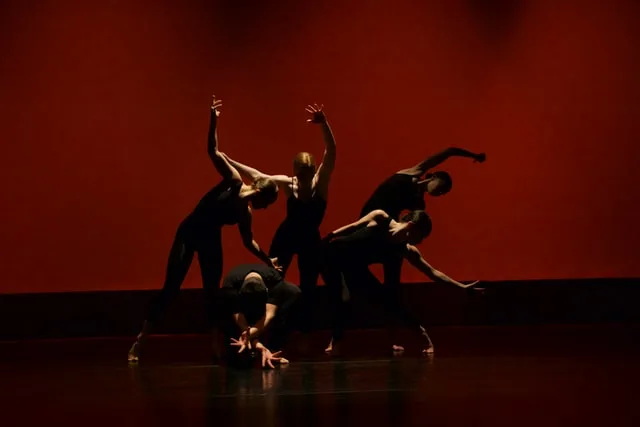 Contemporary — Plymouth
Class is coming soon
Fill out the form for more info
Class Details
Location: TBC
Day: TBC
Time: TBC
Age Group: 17 – 75
Teacher: —
Class Structure
Beginners Class — 60 Minutes
Wake the Spine
A slow, unrushed warm-up that travels down through the spine and settles into the breath, easing you toward the ground this dance is really built on. Nothing is forced this early; it's mostly about unclenching the places you tend to hold tight.
Give Weight to the Ground
This is the trade the whole style runs on — spilling your weight down into the floor and trusting the ground to bounce it back. We take it slowly, so you feel the lift arriving from momentum rather than effort. Once that stops feeling strange, everything else follows.
Carry It Across the Room
The work starts travelling — rolls, spirals and slow drops through the levels, linked so one shape feeds the next. Your stamina builds while you're distracted by the moving, and you start to sense the other bodies sharing the floor.
Into a Phrase
Everything gathers into a short phrase — some weeks a fixed sequence to polish, some weeks a loosely guided improvisation you can take where you like. This tends to be the moment the counting falls quiet and it starts to feel like actual dancing.
Land Softly
We close gently — long stretches, the breathing brought back down, the final minutes deliberately calm. Rushing out straight after undoes a lot of what the hour just did, so cooling down properly counts as part of the session.
About Contemporary Classes in Plymouth
Contemporary is the movement most modern dance-theatre is made from. It stays low and rides on momentum, and its central trick is letting gravity do the work — you release down into the floor and let it hand you back up, instead of bracing to stay upright. There's real technique beneath it, inherited from ballet and then set loose from ballet's fixed shapes.
Plymouth is an unusually good place to learn it, because the city genuinely makes this kind of work. The Theatre Royal on Royal Parade is one of the largest producing theatres outside London, and its TR2 production centre over at Cattedown builds the sets and stages for touring dance-theatre that plays the main house through the year. You'll train a short walk from those stages.
Bare feet are the norm — skin grips the floor better than any shoe. Classes run at partner studios around the city centre and the Barbican, open to every adult from 17 to 75: outright beginners, people coming back after years off, University of Plymouth students from the North Hill side. Nobody tests your flexibility at the door; it turns up on its own. Your exact room arrives with your booking, and we also teach out toward Plympton and Plymstock if the centre is awkward.
Browse all 20 of our dance classes in Plymouth, or see contemporary classes in our other 66 cities.
Fill Out the Form for More Info
Fill in your details for up-to-date class info.
Why Choose Contemporary in Plymouth?
It Ends Up Looking Like You
Nothing here is locked to a single correct shape, so the same movement turns out different in everyone who does it. What you're after is honesty and feeling rather than a pretty pose held for the camera — and that makes your dancing recognisably your own.
Strength Without a Gym in Sight
Sending your own weight down to the ground and lifting it back, again and again, is deceptively tough — it switches on the deep core and the little stabilising muscles the machines at a gym tend to ignore, all without ever feeling like a workout.
An Hour With the Volume Down
Because you move to the pace of your own breathing, and often have nothing at all to remember, the hour drifts toward meditation — the body occupied while the mind finally goes still. Most people walk out looser and quieter than they arrived.
A Working Scene on the Doorstep
You're dancing a few minutes from the Theatre Royal — one of the largest producing theatres in the country — which programmes touring dance and dance-theatre right through its season. When you feel like watching the professionals, they're on your doorstep.
Your Contemporary Journey
From first class to confident dancer — here is how it usually goes.
Getting Down to the Floor
Getting Started
Early on it's all about befriending the ground — small weight shifts, easy spirals, unhurried rolls, each begun with an outward breath. What you're really installing is one reflex, letting go and then catching yourself, that the whole style builds on.
What to Wear
Go for fitted layers that stay put while you roll around, bare feet or grip socks either way, hair out of your face, and a jumper you can peel off once the pace lifts.
Letting Momentum Take Over
Flow
The separate bits begin to flow into one another once you start trusting the swing and the bounce-back, so the movement stops feeling like a list of steps and starts feeling like actual dancing.
First Improvisation
A first, low-key go at improvising — small prompts to move from, with no set routine to follow. It's a cornerstone of the style, introduced softly and taken at whatever pace suits you.
Opening the Range
Longer Material
Phrases grow longer and more demanding — covering ground, changing direction, playing fast against slow — and you build the nerve to properly commit your weight to them.
Expression
You start colouring the movement with intention, so a phrase reads as something you mean rather than a sequence you've simply got right.
A Voice of Your Own
Advanced Practice
Harder, more layered work, plus your first attempts at building movement that's clearly, unmistakably your own rather than handed to you.
What Comes Next
From here you might try composing your own phrases, step into a showcase, or just keep the weekly hour going for its own sake. Either way, keep an eye on what the Theatre Royal has on.
Contemporary in Plymouth FAQ
Everything you need to know before your first class.
Do I need a ballet background to start? +
No. The style took its grounding from ballet but threw out the rigid positions, so starting from absolutely nothing is fine. If you happen to have done ballet it'll help you read a clean line, but it's in no way needed.
I'm honestly not flexible — am I ruled out? +
Not in the least. People arrive convinced they need to be bendy first, but it's the reverse — the suppleness is a by-product of coming, not an entry requirement. This is about weight and momentum, not how far you can fold, and your range loosens quietly week by week.
Everyone mentions 'release technique' — what is it? +
It's the core principle here — letting breath, gravity and momentum move you rather than muscling everything through tension. In practice it feels less like holding a pose and more like falling and catching yourself on purpose, and most British contemporary training is built on it.
Barefoot — so what do I actually wear? +
Feet are usually bare, though grip socks are fine — what matters is not sliding around. For clothes, pick something reasonably snug that survives a lot of rolling, and bring a warm top for the gentle first few minutes before things heat up.
How much of the class is on the floor? +
Quite a lot of it — the groundwork is where contemporary really lives. We ease you toward the floor gradually rather than throwing you at it, so you've built the strength and the confidence for rolling and spiralling before you get there.
Whereabouts in Plymouth are the classes held? +
At partner studios around the city centre and the Barbican, on sprung floors made for rolling and jumping. The exact room comes with your booking, a short walk or bus from Plymouth station; if the centre's awkward, we also teach out toward Plympton and Plymstock.
What does a contemporary class cost? +
One class is £8, paid on the day, and there's no membership tying you down. Once your studio locks in a fixed weekly time, cheaper block bookings become available.
Will I be pushed into improvising or performing? +
No — nothing is ever sprung on you. Improvising is introduced gently, in tasks you can keep as small as you like, and performing is completely optional. Lots of people treat the class as a private hour and never once get on a stage.
Where can I watch contemporary dance in Plymouth? +
You're well placed: the Theatre Royal programmes touring and locally made dance through the year, and its studio spaces host smaller work. Once you've found your feet, ask your teacher what's worth catching.